Sceptics and self-doubt: your fears as a changemaker & adventurer
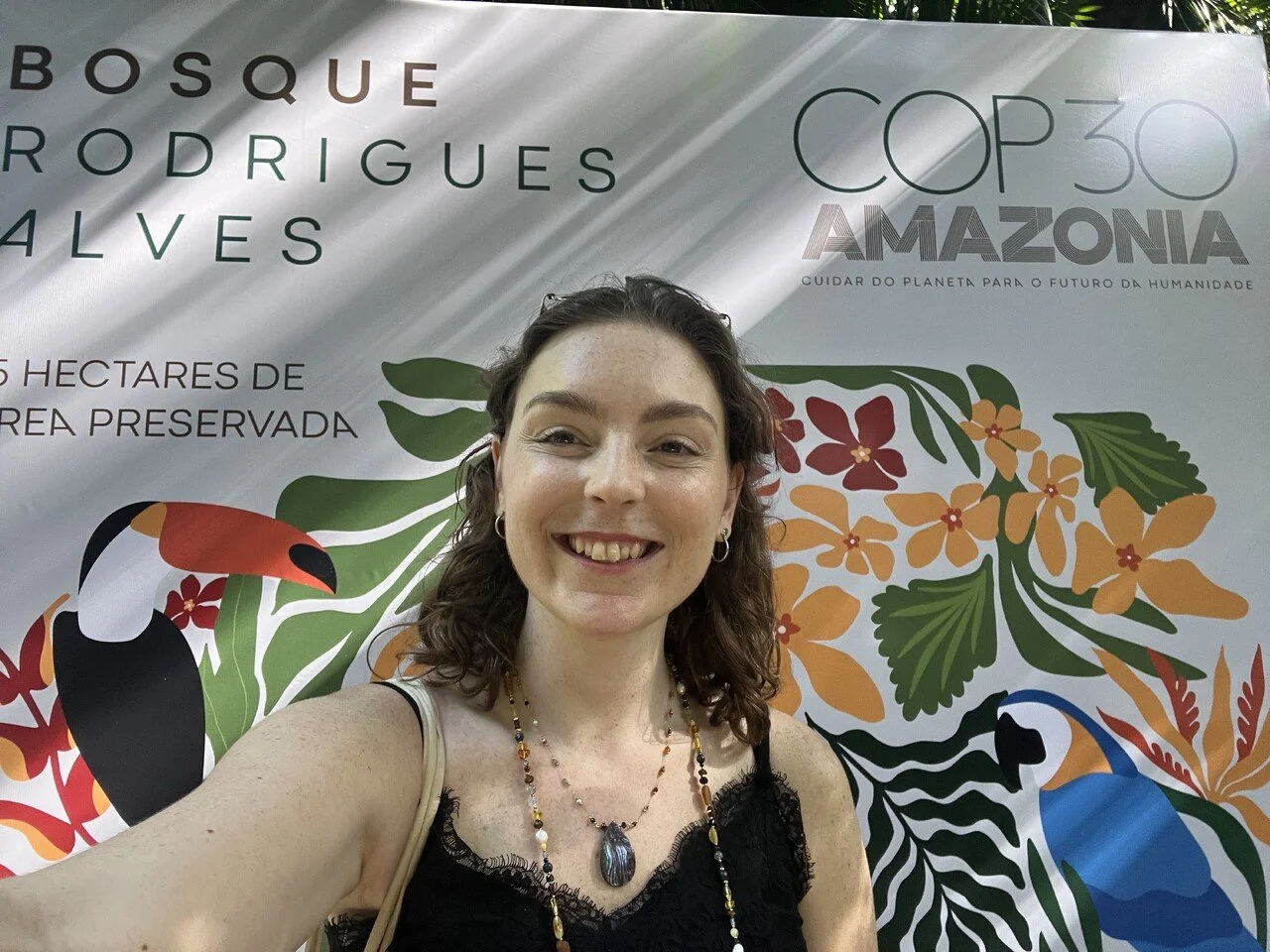
Aurélie Villaespesa, changemaker, adventurer and optimist at COP30
You envisage a different and better way, but what if you are challenged by sceptics and naysayers? How do you cope with your own self-doubt? How do you avoid being crushed by the enormity of your goal when it’s as big as saving the planet?
Crikey it’s not surprising if sometimes we feel like giving up before we’ve even started (and several more times after that if we’re honest), given that these are just some of the common fears of changemakers and adventurers.
I talked to Aurélie Villaespesa, Community Enabler for the Climate Youth Negotiator Programme (CYNP), and acquired some gems that might help if you share some of these fears. CYNP trains, connects, and empowers young climate negotiators to participate meaningfully in the United Nations Framework Convention on Climate Change (UNFCCC) negotiations. Aurélie has recently returned from COP30 where she was with 150 young negotiators from 68 countries. We connected as part of my work for the Wye Adventure, exploring how adventurers and changemakers take on big challenges and ride the ups and downs that come with them.
This is the first of a 3-part blog post series inspired by our conversation, exploring some of the common fears for changemakers, adventurers (and probably most people):
· Fear of sceptics (& your own self-doubt)
· Fear of challenge and change (and failure)
· Fear of getting worn too thin because you want to solve ALL the problems
· Fear of being crushed by the enormity of your goal
This post focusses on coping with sceptics and your own self-doubt.
If you’re doing something new or different, it’s unsurprising to face more uncertainty about whether it will actually work. And this can be difficult for us to cope with, especially as the late Psychologist, Daniel Kahneman, explains in ‘Thinking, fast and slow’, we expect to feel worse if we have taken action and it doesn’t work out - particularly if we acted against the norm - compared to if we do nothing, or stick to the default option – regardless of which option actually seems most likely to have positive or negative outcomes based on the evidence. This doesn’t make us very logical, which is pretty much Kahneman’s point, but the feelings we have are real enough to influence what we do.
So maybe taking action, against the norm, stepping off the beaten path, is emotive enough already that even the thought of sceptics challenging you, or telling you it won’t work, can automatically send you down a doubt spiral: “Yeah why would I think this would work?!”
Aurélie tries to respond to doubters with curiosity. Firstly, curiosity about the other person’s point of view: Why do they think this way, where are they coming from with this? Growing up in places that are very different to each other and with diverse populations (French Guiana and Northern Brazil) she realised early on that people think differently and can be influenced in their ways of thinking by their experiences. This has left her with an appreciation for different perspectives, and a desire to try to understand, engage in dialogue and learn about them.
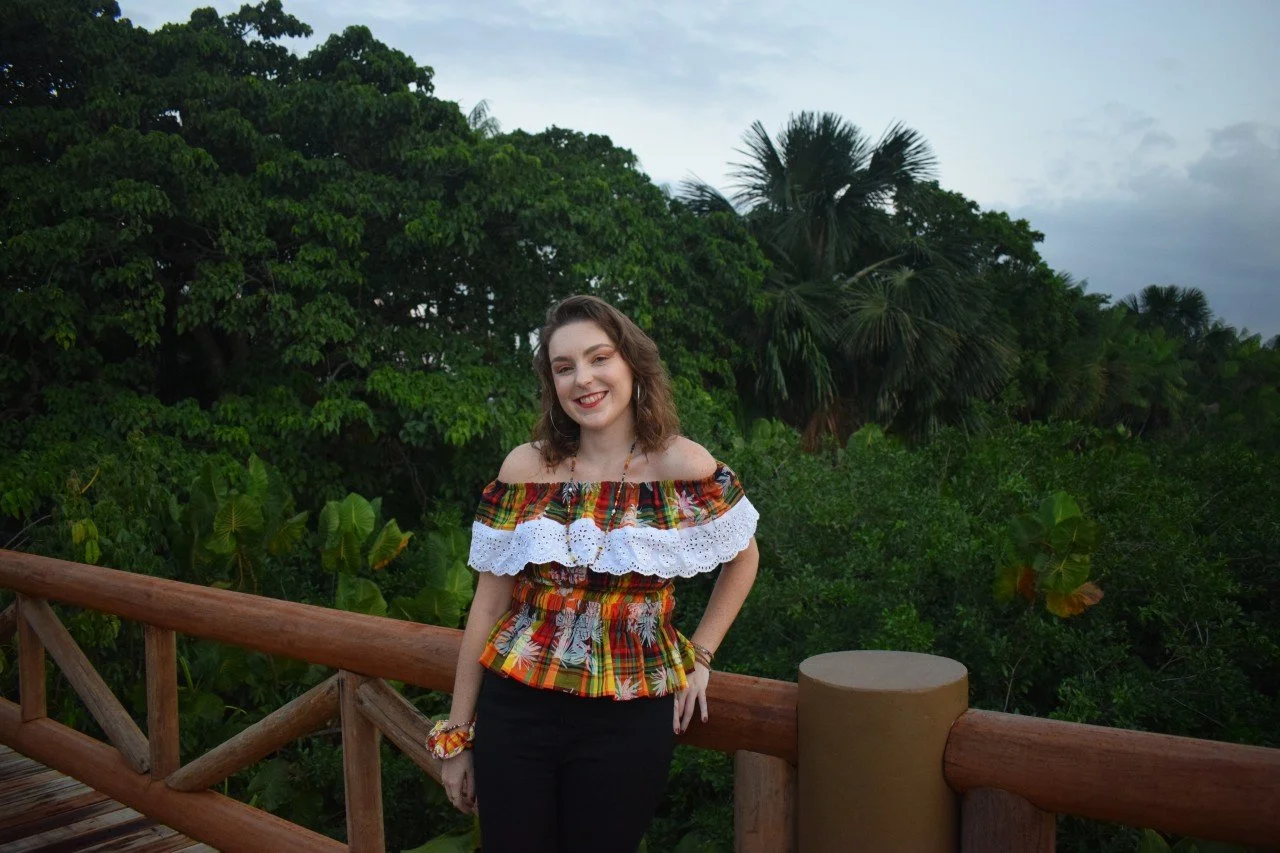
Aurélie wearing a traditional French Guiana top with the Belém Amazon in the background
It reminds me of Isabella Tree, in Wilding, talking about the commentary she and her husband received about the rewilding they were doing on Knepp Farm. It ranged from effusive support to horror and dismay. The Knepp team had enough evidence and support from a wide range of experts to believe in their approach (and they have achieved some amazing results, such as restoring wildlife and soil quality, and reducing local flood risk), but they made efforts to seek opinions, understand what it was that some local people found so concerning, and attempt to dialogue with them. It was Isabella’s own generation (40-60s), who had forgotten what ‘normal’ countryside looks like, who were most likely to want things to stay as they were, compared to older generations who found what was happening at Knepp familiar and beautiful, and who remembered how things had been and what had been lost. The younger generations of course had only ever known British skies to be empty of birds and butterflies, but they had been educated at school to worry about the environment and loved discovering the novel insect-filled air at Knepp.
What made you think this could work?
“When I have doubts or people ask me these questions, I try to reflect why I think this is the way forward. And when I reflect, the things that come up are maybe success stories or knowing what has worked.”
It's easy in a moment of doubt – whether internally or externally triggered - to ask yourself ‘Why did I think this would work?’ as a rhetorical question fuelled by panic, shame, fear, anxiety or self-doubt, in a way that isn’t really a genuine question, but a statement meaning: ‘Of course it won’t work’.
Aurélie tends to ask herself in a way that it is an actual question to prompt reflection - from a place of curiosity. Why DID she think this was the way forward? This sends the mind in a different direction, and she’s more likely to recall the evidence or examples, the beliefs and people that have influenced her own belief that this is worth doing.
Of course, genuine reflection may also lead to you deciding to change course. That can also be a useful outcome – as long as it is actually based on genuine and honest reflection rather than self-sabotage. From my experience as a coach, I think one way to make it easier to distinguish between them is if you are familiar enough with your own personal go-to narratives (eg ‘nothing I do works’) to be able to pick them out when they pop up, and note how they influence your decision-making process.
The power of the support system
“What also really helps me being positive and optimistic is that I have a support system”
Aurélie also copes with doubters and self-doubt by having built a strong and varied support system, and she draws from examples of role models, including those she doesn’t know personally. Her family have a motto: ‘Ready for new adventures’ (her dad even has a t-shirt with this motto on it). She knows she is not the only one who believes it’s worth trying things that are different and unproven. In every single conversation I had during this project, the importance of support network or community was mentioned.
Surrounding yourself by ‘aligned’ people might sound dangerously like a ‘bubble’ or ‘echo chamber’. But reading the ‘news’ and comments sections gives us the skewed sense of being alone in a hate-filled, uncaring world. As the Climate Majority project says:
“when we feel alone, we feel powerless. But once we realise that a majority feels the same way, then we know that we’re part of something very powerful.”
This is why the Climate Majority Project spreads the message that 74% of UK adults are concerned about climate change, and this is why it is important to spend enough time with people who care about the same things that you do, and who don’t trigger a defensive or defeatist response in you, but trigger hope to fuel your action.
If you don’t already have suitable people around you, consider actively seeking them (I can recommend Nature’s Blueprint as a community that helps to fuel action, optimism and energy, as well as The Bloom, which is where Aurélie and I first met.
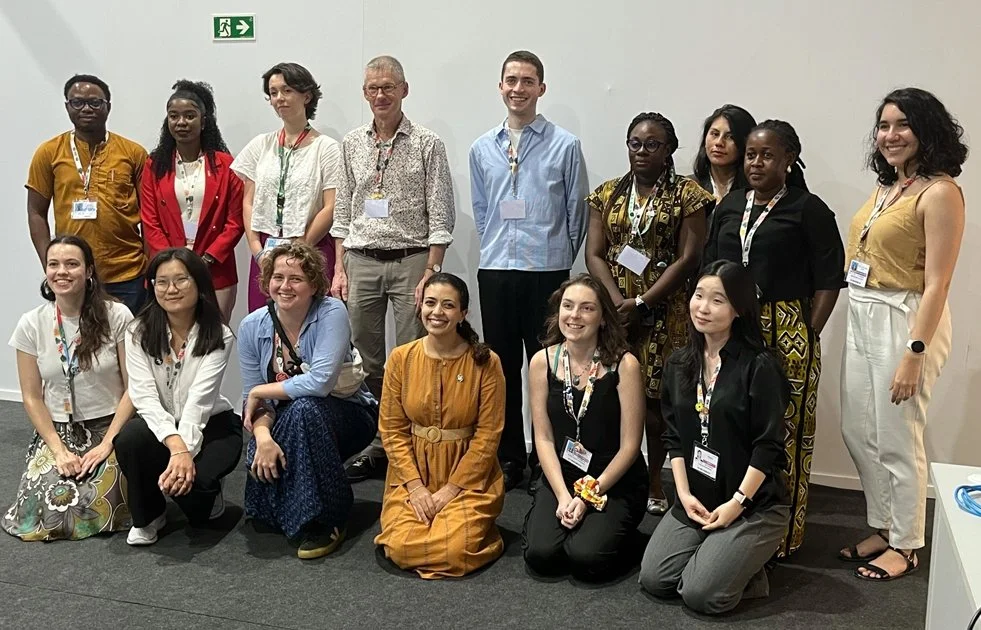
Aurélie with a group of climate negotiators and scientists at COP30
How do Climate Scientists respond to climate sceptics?
During COP, Aurélie and colleagues chatted informally with some scientists from the IPCC (Intergovernmental Panel on Climate Change). Aurélie asked them how they deal with climate sceptics, which is tricky since it affects negotiations and decisions at a global level. This is their take:
They don’t engage in political debates or try to “convince” anyone; their role is to produce rigorous, peer-reviewed scientific reports.
They make sure their findings are clear, well-justified, and transparent, so policy makers and the public can rely on the science.
When sceptics question the science, they don’t argue ideologically, but ensure their methodology and evidence are robust.
They’re open to constructive criticism, for example on diversity or representation, which helps them stay critical and avoid a bubble.
Fact-checking and transparency are key: all data and sources are documented so anyone can examine or reproduce the results.
This fits with what I picked up from Nathan Grossman’s documentary, ‘Climate In Therapy’ (recommended viewing!), where 7 climate scientists experienced a group therapy session. It’s absolutely imperative for them that they stay within their role as scientists: objective, unemotional, data-driven. In the film the climate scientists expressed discomfort about being challenged by sceptics, referencing examples where even non-controversial descriptions of scientific processes are being called ‘fake’ on social media. It makes them even more determined to stick to the science. I come from a science background myself, but I wonder if they ever get time speaking as freely, emotionally and unguardedly as they choose - with supportive and like-minded people - as an antidote. At the same time, perhaps there is something that we can borrow from the concept of being ‘like scientists’ and returning to the evidence and data if we feel challenged, especially if it helps us to cope with the fear of that challenge and avoids self-doubt spirals.
How to cope with sceptics and self-doubt
This is what Aurélie does:
Assumes people come from a place of curiosity rather than assuming threat
Is curious to understand others’ thought processes
Is willing to dialogue and perhaps explain her own perspective
Genuinely asks the question ‘Why do I think this will work’, and comes up with answers, examples, evidence and reasons to be optimistic, as well as a chance to honestly reflect.
Spends time with a varied and aligned support system
People around her role-model mindsets that she finds helpful – eg ‘ready for new adventures’
So from this supported place, this curious place, having evidence and examples to hand, and an interest in understanding others without being threatened by them, Aurélie can see challenge from sceptics and doubters as a useful opportunity to learn about other perspectives, to reflect, and perhaps even adjust her approach according to what she learns, but it doesn’t have to lead to an automatic doubt spiral and abandoning the plan.
Thinking about choosing an option that is ‘different’ to the norm, or even seeks to change the norm, how does it feel to imagine being challenged by sceptics? Does it feel bad enough to stop you from choosing that path, even if you believe it is the right one for you, for your goals, for your organisation, your cause or the world?
Is there anything from Aurélie’s approach that you could usefully experiment with or that inspires a way forward, even with the possibility of being challenged?
Coaching can help you to overcome self-doubt or fear of sceptics so that you can take action and make progress with your changemaking and adventuring goals. We can help you to understand more about why you believe it’s the right way forward, to prepare for challenges, to find ways to manage the doubt, boost your inner hope and external support, to understand what is being triggered in you that causes you to react the way you do to doubt and sceptics, and decide based on honest reflection whether to change the plan or stay the course. If you think coaching might be helpful for you, get in touch for a chat to find out more and see if we are a good match: christina.transformational@gmail.com