Even changemakers and adventurers can fear change and challenge

Photo by Tasos Mansour on Unsplash
Just because you're a changemaker or adventurer (or building up to it), that doesn’t necessarily mean you like change, challenge, uncertainty or risk. Maybe you actually hate it, but you just know things must change. You can’t ignore that little voice, unsee that vision, or turn a blind eye. Aurélie Villaespesa, from the Climate Youth Negotiator Programme and fresh from COP 30, loves change and challenge. Can she inspire you to love change and challenge (or at least find SOMETHING to love amongst its flaws), so that you can experience more joy, thrill, satisfaction, resilience and opportunities for awe (even if uncertainty, discomfort, disappointment and all the rest have to tag along too), doing what matters for people, planet & yourself?
Aurélie Villaespesa is a Community Enabler for the Climate Youth Negotiator Programme (CYNP), which trains, connects, and empowers young climate negotiators to participate meaningfully in the United Nations Framework Convention on Climate Change (UNFCCC) negotiations. At COP30 she was with 150 young negotiators, from 68 different countries, who are part of the CYNP community. She is a changemaker, an adventurer and an optimist.
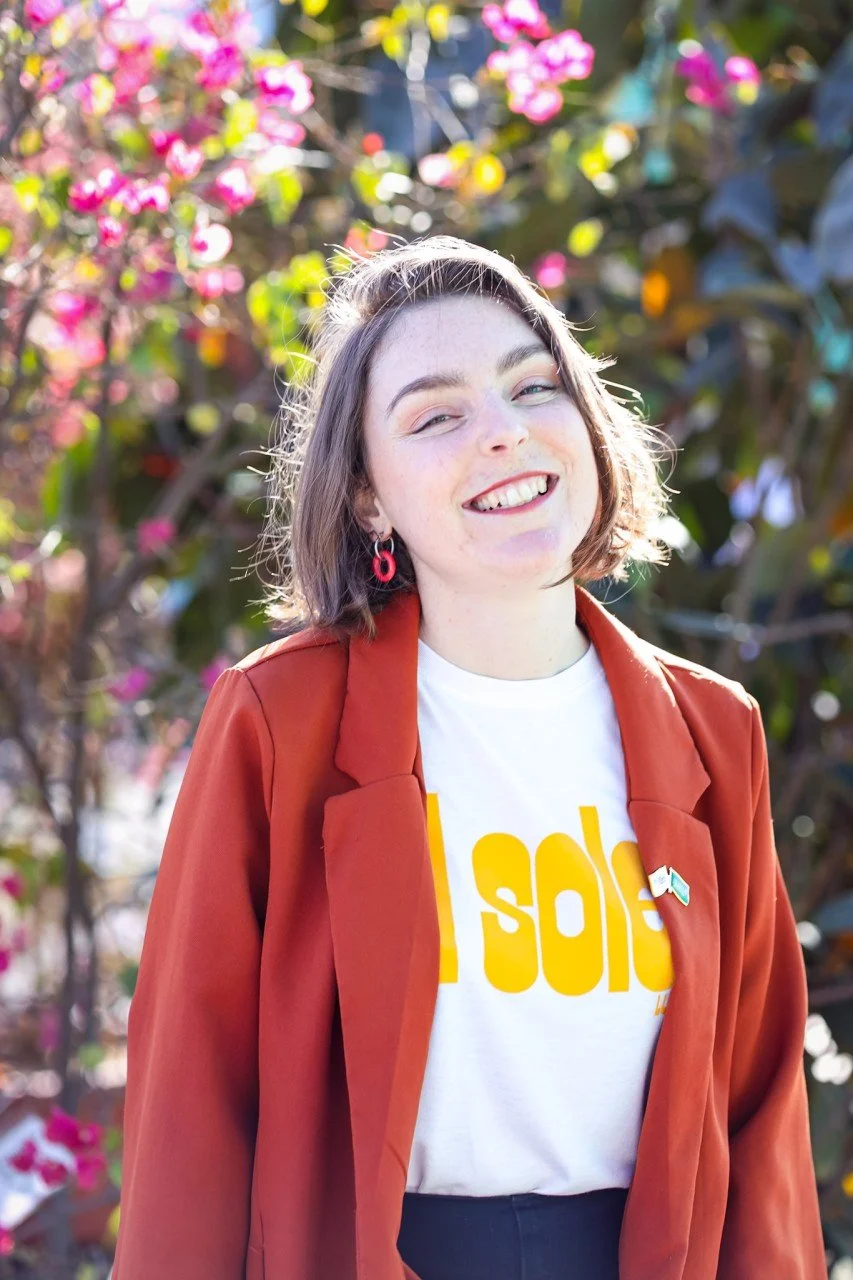
Aurélie Villaespesa, Community Enabler for the Climate Youth Negotiator Programme
This is the second of a 3-part blog series inspired by conversations with Aurélie, drawing out inspiration about how to overcome some of the common fears that can hold us back from acting towards our goals – no matter how important, meaningful or urgent we believe them.
The previous blog post looked at coping with fear of sceptics and your own self-doubt when doing something unproven, going off the beaten track, or changing the status quo.
This post is about the fear of challenge and difficulty, and fear of change.
Even changemakers and adventurers who love novelty and action are not immune to the anxieties that can come with it. And some changemakers are not driven by a love of change at all. Autism is one type of neurodivergence that is apparently (and unsurprisingly to me) disproportionately represented among changemakers, activists and people doing things differently to the norm – even though autism is often (not always) associated with high levels of discomfort about change. This can be because another common autistic trait is intolerance to things that are unjust, wrong or don’t make sense. Whether you are autistic or not, your need to make things better or find a better way can feel difficult to manage if the certainty and familiarity of the current situation feel like safety to you. Change, with the uncertainty it brings, can feel unsafe and risky.
So just because you are, or want to be, a changemaker, it doesn’t make change easy for you.
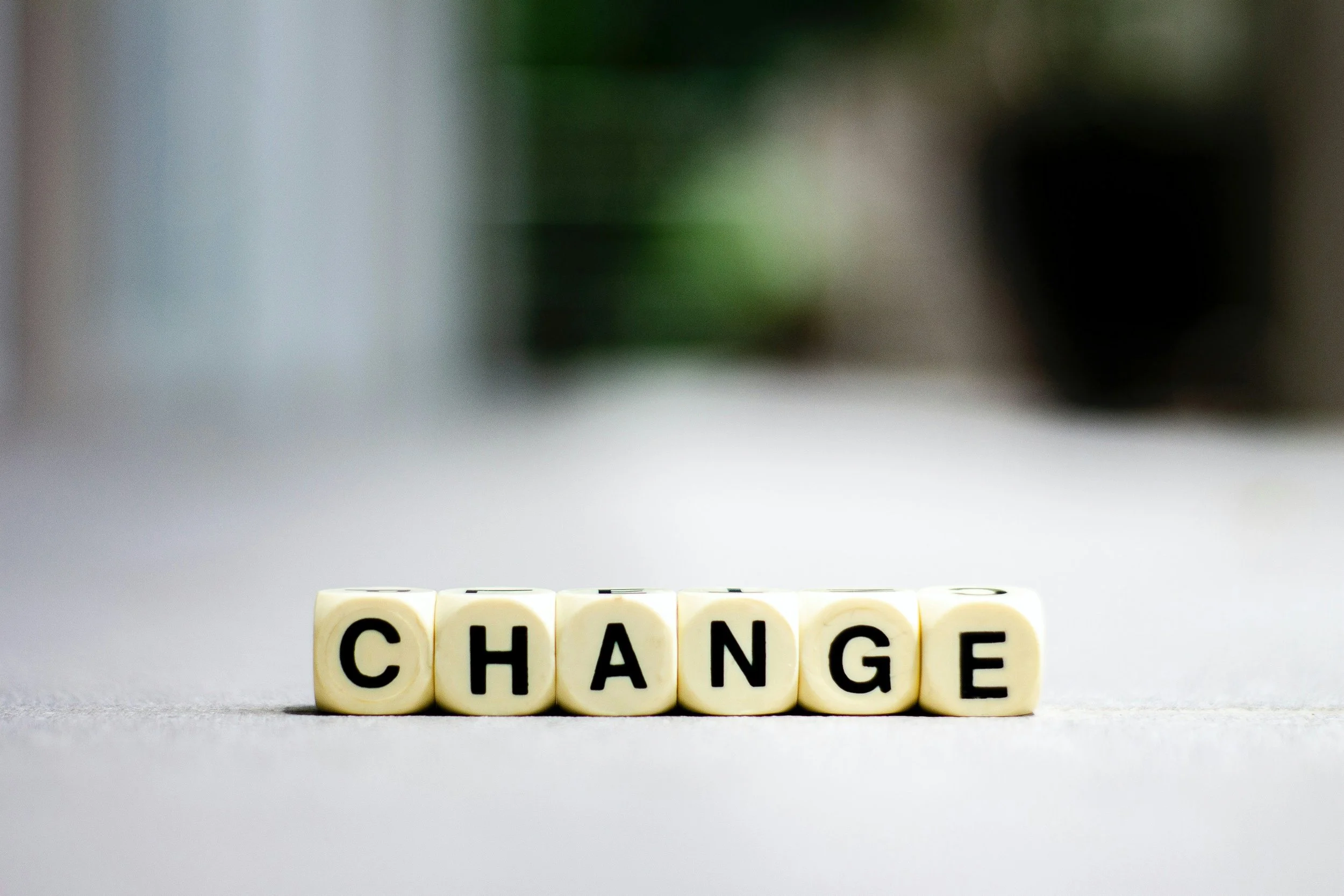
Change: fraught with uncertainty, prey to the luck of the dice, risky. Best to avoid? Photo by Road Ahead on Unsplash
Aurélie happens to particularly like change and newness: to her, change means an opportunity for learning and discovery. She actually enjoys leaving her comfort zone because it gives the opportunity to ‘discover new things, and there's so much to discover. The more you discover, the more you discover that there are things to discover!’ She calls this zone beyond her comfort zone her ‘growth zone’ or ‘learning zone’. She acknowledges that with change, for example as someone who has moved around a lot, and experienced the sadness about what you leave behind, there can be negative sides, but on balance, she sees change as positive.
Moving around and constant change might not be for you, but if you are also someone who loves learning, and if perhaps fear of change has loomed too large for you to feel the joy of learning, what difference might it make if you switch focus and bring learning and discovery back into the foreground? Is there something about the joy of learning and discovery that might bring some ease if you were able to notice it?
Reflection/ journal prompt idea: What opportunities for learning and discovery might arise through your plans as an adventurer or changemaker?
Aurélie’s love of learning and discovery is also connected to her sense of curiosity. Research suggests that if you share Aurélie’s trait of ‘curiosity’, you might be more motivated to explore, willing to choose activities that stretch and develop you, be drawn to novelty, challenge, uncertainty and complexity. Researchers think this might explain findings that curiosity leads to ‘sustainably meaningful living’, predicts greater life satisfaction and long-term wellbeing, as well as more ‘growth oriented’ behaviour’, like persisting at goals in the face of obstacles, or expressing gratitude to others. Although we’ve all heard that ‘curiosity killed the cat’, there is even research that suggests curious people might live longer. Although we are born curious, the constraints of life can dampen it. Psychologists believe that a tendency towards curiosity can be developed and re-grown, like a skill, with practice. Fear of change might pull you back, but as you develop your trait of curiosity, that might provide a counter-pull forwards.
Reflection / journal prompt idea: What could you do to re-grow your sense of curiosity?
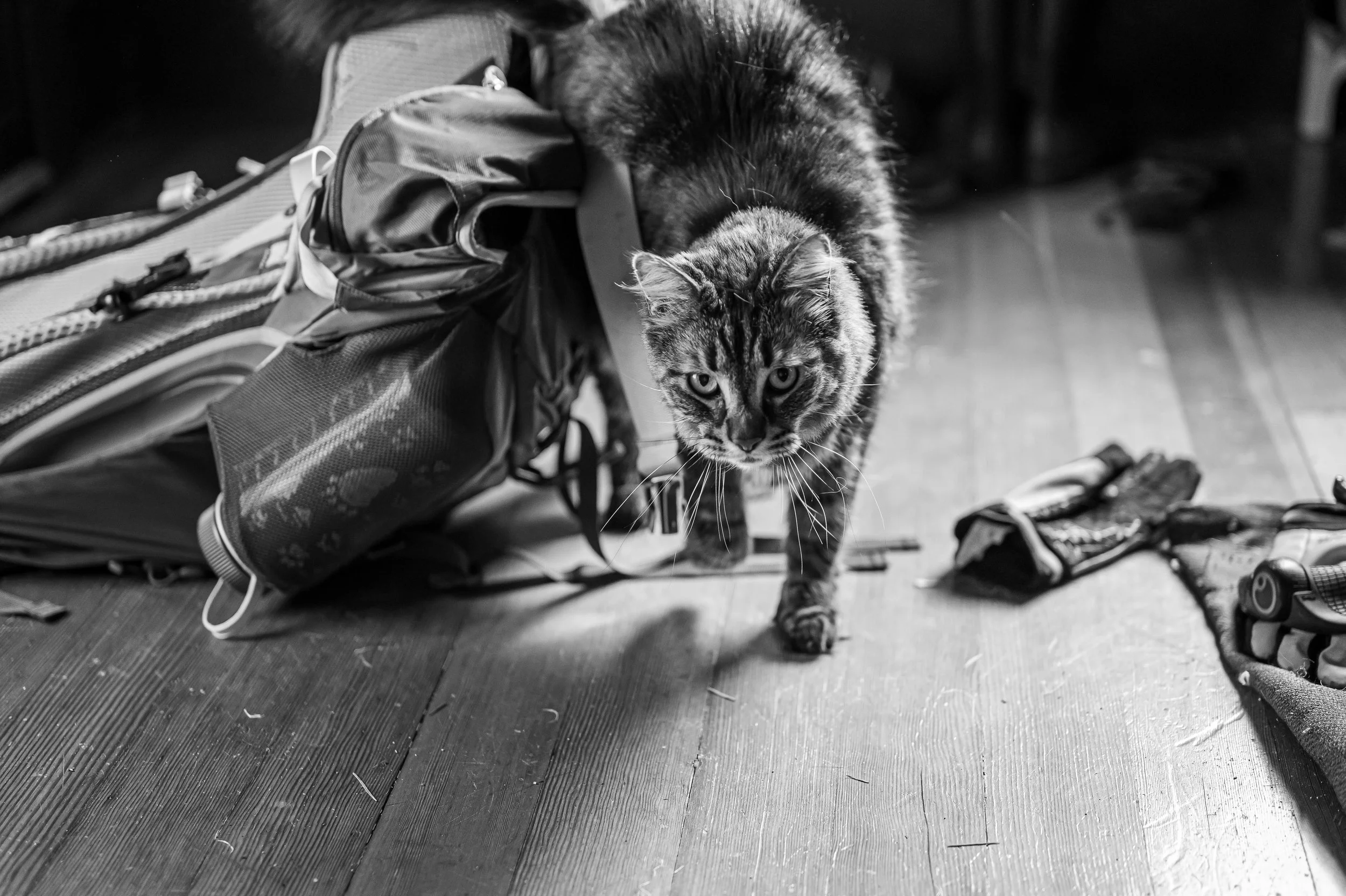
OK so maybe ‘curiosity killed the cat’, but what might happen if you re-awaken your own curiosity? Photo by Jeremy Mowery on Unsplash
Of course some people already have bags of curiosity, and a love of discovery and learning - perhaps too much! You want to do everything and go everywhere. Some people say these traits stop them doing things, because of decision paralysis or fear of getting stretched too thin and burning out. The next blog post in this series touches on this. If you sign up to receive emails from me, I’m sure eventually I’ll send an email out with the next blog post link, or you can check back here in a week or so!
Aside from change in general, the thought of the challenge ahead can be enough to put you off. You might wonder, will you be able to overcome the difficulties - are you clever/brave/talented enough? Challenge can be an unpleasant word. It makes things sound, well, hard. Off-putting. Obstacles and difficulties and barriers. Confrontation. Speaking with Aurélie I got the idea that the word ‘challenge’ has a different feeling for her, and sure enough when I asked her about it, she said:
“I think what I like about challenge, or when people say the word challenge, is it opens a door for many possibilities. I see challenge as possibility opening, and I really like that. I really like the concept of everything is possible, and so you made a choice. And when a challenge comes, it's like, wow, I have all these different possibilities from now on. I think challenge is a synonym of opportunity for me. And what I like about having multiple possibilities is I don't have an answer. I don't know why I like that - it's just everything is possible. And I like this feeling. I don't know - it gives me a feeling in my body like, sparkle, yeah, ‘spark’, a feeling like everything is possible. And I mean, I think maybe sometimes when people think about challenge, they think about failure, things like that. And for me, I don't really like this word failure. I don't really believe in failure, more in learning.”
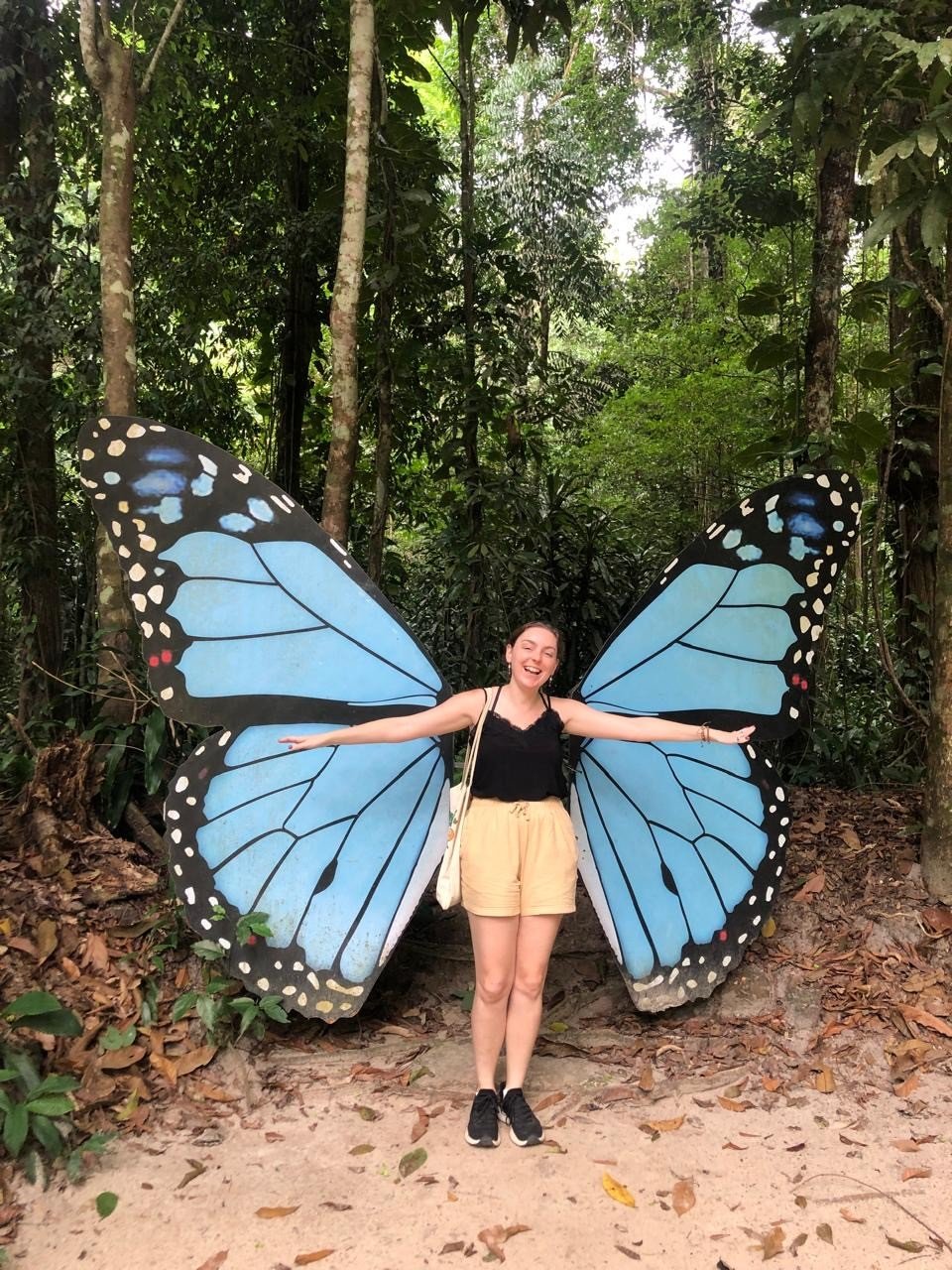
Aurélie says: Challenge “gives me a feeling in my body like, sparkle, … a feeling like everything is possible”
Is it time to update your definition of challenge? Could your new definition be:
‘Challenge: a possibility opening; opportunity; a feeling where everything is possible; often associated with a feeling of sparkle in your body’.
How do you feel about this definition? Perhaps there is a part of you that can really feel that sense of sparkle or spark already. And perhaps there is another part of you that absolutely rejects that definition. How about allowing both parts to express their perspective? Is there a new definition for ‘challenge’ that works for the whole of you?
Belinda Kirk, a professional adventurer and explorer, who is the author and founder of Adventure Mind, talks about the value of redefining threat as a challenge or opportunity: ‘a threat is demoralising, but a challenge or opportunity is enlivening.’ (Notice how in Belinda’s definition, similarly to Aurélie, challenge already is enlivening, and it’s the more obviously negative word of ‘threat’ that gets redefined). She adds that one of the most important mindsets that adventuring has given her is that ‘you react to difficulties in life as challenges and opportunities, empowering yourself to engage and try, rather than freeze or give up. You become emboldened in life; you have a secret superpower.’
Something else interesting that came up in the conversation with Aurélie was her love of puzzles, and happy memories of doing 5000 piece puzzles with the family. To her, the word ‘challenge’ conjures up the idea of a puzzle to solve, something to get her teeth into. She says, ‘Whenever there's a puzzle, it means that there's a solution somewhere… I don't understand it as the perfect thing that will solve everything…It can be a solution that is not wonderful... But you brought an answer to something, and I think I'm ok with that. Like sometimes you just have to be ok with small things and don't try to have success stories every time.’
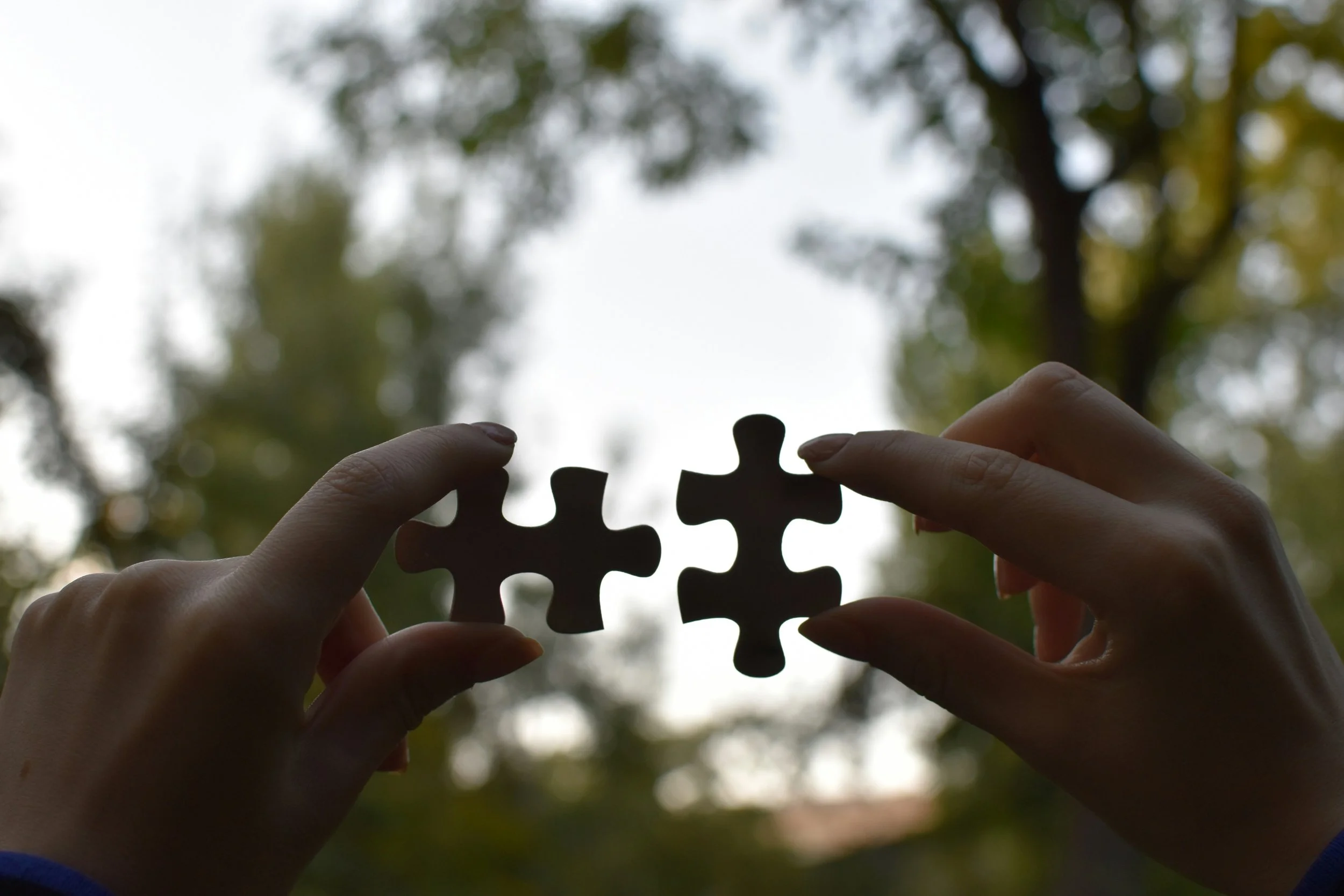
A challenge is like a puzzle to solve - Photo by Vardan Papikyan on Unsplash
Of course, Aurélie acknowledges that challenges are not always ‘pretty’ and there are some that she would rather avoid: she might get through and survive but she can’t always say they have gone well. However, even with these experiences, she reflects that on looking back afterwards, she can learn from them. She learns about her limits, she learns skills for the next time she encounters such a situation, or perhaps a way to avoid it in future. And even if she can’t do anything differently, she might at least be ‘Less concerned about it, because you already lived that, and you know a bit more about yourself.’ To me, this practice of looking back and reflecting is significant, because it is not true that ‘what doesn’t kill you makes you stronger’ or that ‘adversity builds resilience’. Adversity and ‘what doesn’t kill you’ can be damaging and debilitating. We definitely have the potential to build strength from adversity, and even ‘Post-Traumatic Growth’ is well-documented; but it’s not automatic or guaranteed, and its unlikely to be linear or pain-free. Reflection and processing (and support) can make it more likely that you come through stronger, with something useful out of it, able to make the necessary changes, or find the support or resources you need.
Aurélie’s observation that having been through challenges, when you come up against them again you are ‘less concerned about it, because you already lived it’ reminds me of ‘Big Adventures on Average Talent’ ultramarathon runner, Mark Gillett (my husband), talking about how his adventures give him the opportunity to experience challenge, becoming more familiar with that feeling of not knowing if it will work out, and learn from experience that he can survive uncomfortable places and come out the other side (you can read about some of those uncomfortable places here). This means he can have less fear of challenge - which is helpful because there will be unavoidable challenges in life, and because sometimes choosing challenge can be so worth it.
Similarly, Belinda Kirk says that the more people go on adventures, the more they have evidence to dispute any thoughts of ‘I can’t do this’, because they’ve already proven that they can do challenging things. She believes that adventure is essential to our wellbeing, and to help us to manage anxiety and fear – and this is one of the reasons. She also shares that through her years of adventuring, although she still feels the fear, she has developed the ability to reframe that fear as useful, even her ‘superpower’.
It is in the facing of challenge and change that you gain the experience and ability to cope with them; as well as the opportunities for joy, satisfaction and confidence-building that strengthen resilience. So perhaps one way to cope with the fear of change and challenge in the situations where it is necessary as a changemaker or adventurer – or just to get by in life - is to seek out more change and challenge by choice - perhaps by changemaking and adventuring?
Paula McGuire, who claims to be ‘the world’s least likely adventurer’, had always thought that by 30 years old she would be making a difference and helping people, but instead her anxiety was so bad that by her 30th birthday she couldn’t leave the house. She says that she saved her life by turning to adventure, and had incredible experiences like completing a triathlon even though she couldn’t ride a bike or swim and was afraid of water! She completed the triathlon using a float for the swimming and despite falling off the bike several times. She says (in Adventure Mind): ‘Protecting myself from fear for twenty years kept me in a box of my own making, living life to the emptiest and pretending I had everything I needed in there. Nowadays I welcome fear… Being scared by the big things reminds me not to be scared by the little.’ Although Paula later went through some huge and life-changing traumas, such as surviving a stroke, it’s clear that adventure and challenge, and going out of her comfort zone are still part of her toolbox in her ongoing journey to cope with, and even find joy, in the ups and downs that life brings.

Mark Gillett enjoying the challenge of a ‘Big Adventure on Average Talent’
So to recap, and return to Aurélie, this is how Aurélie sees change and challenge:
· Leaving her comfort zone is appealing because it allows her to enter her ‘growth’ or ‘learning’ zone
· Change and newness gives the possibility of discovery and learning
· The word ‘challenge’ is a synonym of opportunity, and opening a door for possibilities
· Challenge gives a feeling of ‘sparkle’ (Belinda Kirk’s version is ‘enlivening’)
· Challenge means something to solve or work with – a puzzle to solve, an opportunity to come up with solutions – even if they’re not perfect
· Looking back to reflect on the challenges that are ‘not pretty’ can provide useful lessons, and at the very least you build familiarity with experiencing challenge and coming through it.
I’m cautious about saying things that could be interpreted as you should ‘just see things differently’ as this can come across as a bit ‘toxic positivity’, or trying to be someone you’re not. On the other hand ‘reframing’ and ‘reappraising’ are core to some well-established and well-evidenced psychological theories and therapies like Cognitive Behavioural Therapy (CBT). But this is not about changing you, trying to be someone you’re not, or denying the truth of the risks or ‘bad things’ that can come with change and challenge, it’s more about allowing two things to be possible at once: change can be scary AND joyful; challenge can be risky AND rewarding. Often our attention gets stuck on the fear and risk, but broadening how you see change and challenge might allow you to do the things that matter to you and feel more values-aligned with the life you’re living.
Perhaps something from Aurélie’s mindset will resonate with you, perhaps something that you used to believe and forgot, or something that you still do believe but it gets lost, and maybe hearing about Aurelie’s approach might reconnect you with it, or inspire an evolving outlook.
Several things that Aurélie spoke about here lend themselves nicely to art, embodiment and journalling practices to aid exploration and reflection – drop me an email on christina.transformational@gmail.com if you want some ideas, or we can do them together if that would be helpful.
Coaching can help you to cope with fear of (and the experience of) change or challenge when taking on something that matters. Get in touch if you want to chat about whether coaching might be useful for you.